Issue 9 June 2026

Together We Can Fly
Welcome to Issue 9 of our newsletter. We highlight the ongoing success of the SAN initiative and at the end of the newsletter summarise the survey results to date
247 Airfields ID as strategically Important
247 airfields in the UK have identified as strategically important
England—200, Wales—14, Scotland—29, Northern Ireland—4
Licensed—47, Unlicensed—195, Military-5
Category A -27, Category B-43, Category C-89, Category D-88
See full airfield list Airfield List | Strategic Aerodrome Network - SAN
New updated SAN Map https://www.san-ga.co.uk/airfield-map
Royal Aeronautical Society (RAeS) magazine features SAN
The RAeS have published an article on SAN and related items
The full article can be read at More than just somewhere to land
Manston airfield to reopen in 2029
Manston airfield has taken another step closer to being reopened to aviation. The aim is to have the airfield operational in 2029 as an international freight hub, whilst providing passenger services, business aviation and aircraft engineering facilities
A public consultation has been launched, focusing on the airspace design and flight procedures only. Residents, aviation stake holders, environmental groups etc are invited to review the proposed routes and submit comments
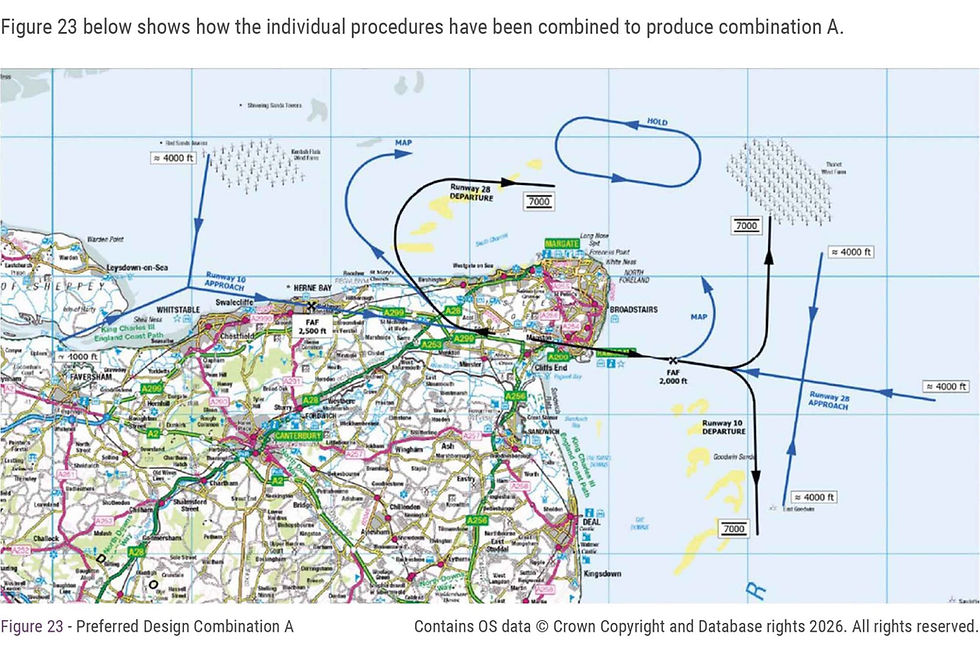
The consultation is open from 16 March 2026 to 22nd June 2026
Balado airfield awarded British Microlight Aircraft Association (BMMA)Industry award
Balado airfield has been awarded the BMAA industry award at the recent BMAA awards ceremony
The award was given to Balado airfield for transforming the airfield into a busy airfield which encourages community engagement. It also has STEM outreach programs for local schools, flight training scholarships for young aviators
Balado airfield has recently undergone a large number of upgrades/investments - new hangars and new fuel installations
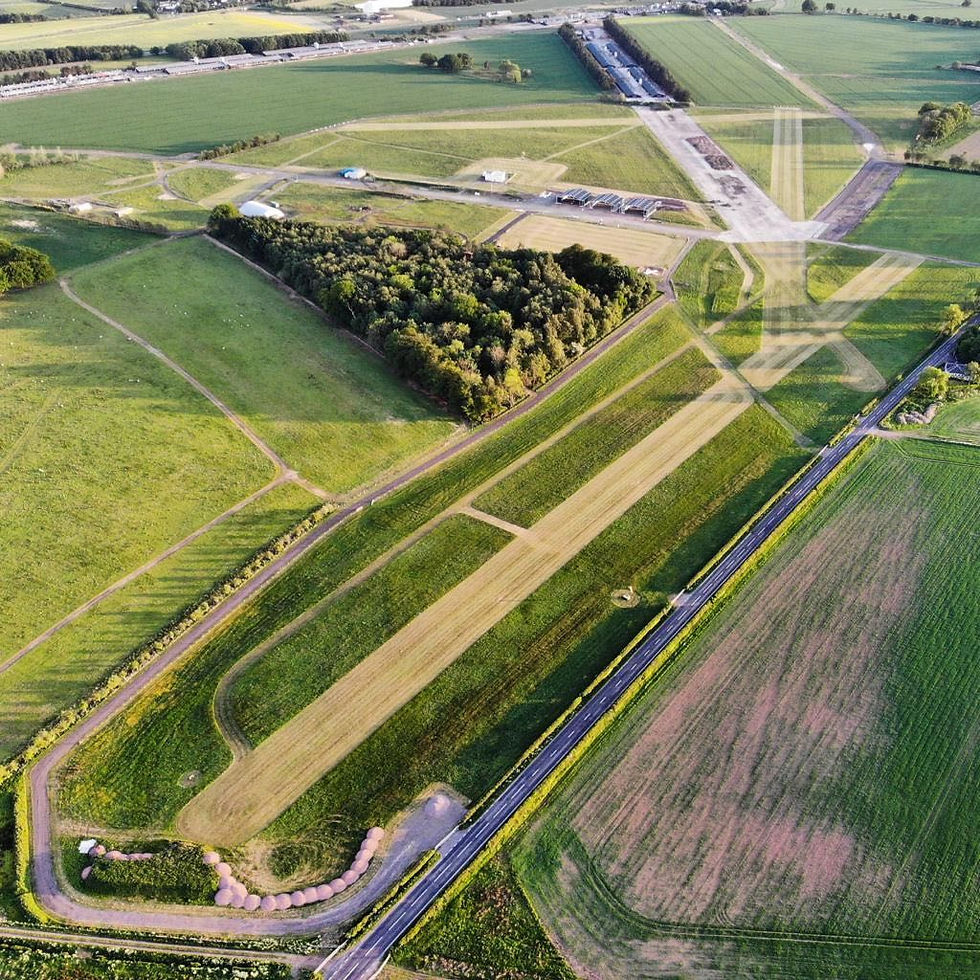
The airfield is a great place to visit, info in UK VFR Flight Guide, Pooleys Flight Guide and SkyDemon
See www.baladoairfield.co.uk for more information
Coventry airfield closes 11th June 2026
Coventry airfield has ceased operations to allow a road to be built through the airfield with the aim of building a battery giga factory
If the planning permission for the factory is not gained, the plan is to split the airfield into 7 smaller plots for commercial use

Coventry airport opened in 1936 as Baginton Aerodrome. It was used as a WWII fighter airfield. It has been a vital GA airfield for many years with many flight training and maintenance organisations based on site
Air Atlantique operated and maintained many classic aircraft from the site
Aerodrome Safeguarding
By John van Hoogstraten

Small aerodromes and General Aviation (GA) airfields form a critical component of the UK aviation ecosystem. They support pilot training, recreational aviation, emergency diversion capability, engineering activity, aerial work, and local economic development. Despite this importance, many smaller aerodromes remain vulnerable to incompatible development because they lack a structured safeguarding framework integrated into the planning process. A detailed safeguarding plan is therefore essential to protect both aviation safety and the long-term operational viability of these facilities.
Aerodrome safeguarding is not solely about protecting large commercial airports. Even relatively small airfields operating microlight, light aircraft, or unlicensed operations require protection from developments that may create physical obstacles, increase bird-strike risk, introduce lighting confusion, or erode emergency landing opportunities. Safeguarding should be embedded within Local Planning Authority (LPA) consultation processes so that aviation considerations are identified early during pre-application and planning stages.
One of the key strengths of a detailed safeguarding plan is that it creates clarity for all stakeholders. Developers, planners, and aerodrome operators gain a defined framework identifying consultation zones, obstacle thresholds, and development types requiring technical assessment. This allows potential conflicts to be identified early, enabling practical mitigation such as revised building heights, adjusted lighting schemes, relocation of infrastructure, or operational controls. Without such a framework, developments can progress without fully understanding the operational consequences for aviation safety.
Modern aerodrome safeguarding extends far beyond simple obstacle penetration. It must consider a wide range of factors including renewable energy developments, telecommunications infrastructure, drone activity, glint and glare from solar installations, crane operations, wildlife attractants, and the cumulative effect of multiple developments within the circuit environment. These issues can affect pilot situational awareness, navigation, visibility, and emergency manoeuvring capability, particularly for smaller aircraft operating at lower altitudes.
An especially important consideration for smaller aerodromes is the preservation of Emergency Landing Areas (ELAs). Aircraft operating within visual circuits at relatively low altitudes require access to safe forced-landing options in the event of engine failure. Development beneath or adjacent to circuit patterns can gradually erode these emergency landing opportunities, increasing operational risk even where no formal obstacle surface is penetrated. Safe operations depend not only on normal flight paths, but also on maintaining resilience during abnormal and emergency scenarios.
Importantly, a safeguarding plan provides a proportionate approach tailored to the aerodrome’s operational environment. Smaller airfields do not necessarily require the same complex safeguarding surfaces applied to major international airports. Instead, safeguarding can be adapted to local operations, runway configurations, terrain, and aircraft types while remaining aligned with national guidance such as CAP738, CAP168, CAST advice, and ICAO Annex 14 principles. This proportionality is critical in balancing sustainable development with aviation safety and operational continuity.
Detailed safeguarding plans also provide wider strategic value. Many smaller aerodromes contribute to aviation training, engineering, STEM education, tourism, and community activity. They often act as gateways into the aviation sector and support future pilot and engineering development. Protecting these facilities from incompatible encroachment therefore aligns not only with aviation policy, but also with broader economic, educational, and infrastructure objectives.
Ultimately, safeguarding should not be viewed as a mechanism to prevent development. Instead, it is a collaborative planning tool that enables informed decision-making, protects public safety, and ensures that aviation infrastructure can continue to operate safely alongside surrounding growth. For small aerodromes in particular, a detailed safeguarding plan provides the structured evidence, consultation process, and policy alignment necessary to secure their future in an increasingly constrained planning environment.
Airfield Focus - Old Buckenham
By Matt Wilkins
Old Buckenham was originally built for the 453rd Bombardment Group of the 8th Air Force, flying B-24 Liberators. Hollywood was well represented; via Operations Officer Jimmy Stewart and Walter Matthau.
Today the aerodrome has three runways, parking for several hundred aircraft thanks to some 2021 improvements and has recently announced the opening of the already popular Officer’s Mess Café

The Old Buckenham Airshow is Norfolk and Suffolk’s only Airshow and has sold out for the last five years; with regular appearances by the Red Arrows, Typhoon and B-17 Flying Fortress, Sally B. It’s the largest event in Breckland Council’s purview, has won awards and has a remarkable 75% retention rate of customers year on year. Norfolk Airshow | Old Buckenham Airshow | Old Buckenham
The aerodrome has also become the home of electric flight in the UK. The NUNCATS electric Skyjeep project has all R&D and assembly operations at Old Buckenham, and test flying is a routine occurrence. Adding to this is a long running relationship with NEBO Air, operator of the largest fleet of Pipistrel’s Velis Electro in the UK; the airfield is home to their ‘Electric Arrows’ the world’s only electric display team, responsible for the world’s first zero emission air display.

NEBO aircraft are amongst over 40 based at the airfield which has operated a waiting list for hangarage and membership for the last decade. Other activities amongst the many at the site are two museums for the USAAF, a sizeable military collection occupying over an acre and a Museum dedicated to Firefighting. Another company offers STEM educational rocket building and launch projects for schools and so Old Buckenham can often be seen with a NOTAM for a Rocket Launch active.
Critical National Infrastructure (CNI) and Critical National Priority (CNP)
CNI
Critical National Infrastructure (CNI) in the UK is defined in Wikipedia as …‘infrastructure considered essential by governments for the functioning of a society and economy and deserving of special protection for national security.’
This term and status has been in place for many years. However, the scope of CNI is being expanded and may start to have a greater impact general aviation airfields.
The most recent category to be added to the list is ‘data centres’ and one is proposed just to the south west of Denham Aerodrome. Denham was not consulted in the developer’s first round of consultation but, having now raised with it the potential impact arising from obstacles – such as physical structures, pylons, wind turbines; equipment – including radar, electronic equipment and illumination; surfaces which generate glint or glare; trees and
wildlife; heat sources; gas emissions and other venting - the developer has undertaken to engage with the aerodrome.
The national importance of CNI will often trump (overused word these days) the significance of general aviation activities and aerodromes. However, CNI does not override ‘human health’ or a risk to human safety created by the scheme, with the potential for loss of life or injury, so, this should be explained in any representations.
The full list of CNI is:
Chemicals: Essential chemical production, industrial facilities, and storage.
Civil Nuclear: Nuclear reactors, waste storage, and materials.
Communications: Telecommunications, broadcasting, and postal networks.
Data Centres: Digital infrastructure for cloud, internet, and data storage.
Defence: Ministry of Defence assets, armed forces facilities, and the defence supply chain.
Emergency Services: Police, ambulance, fire and rescue, and coastguard.
Energy: Electricity generation and distribution, gas, and oil.
Finance: Banking, financial markets, and payment systems
Food: Production, supply, and logistics of essential agricultural and food products.
Government: Civil service operations, parliament, and key public administrative facilities.
Health: National Health Service (NHS) trusts, hospitals, and public health supply chains.
Space: Satellite systems and orbital infrastructure relied upon for communications and navigation.
Transport: Aviation, rail, maritime, and road networks.
Water: Drinking water supply and sewage/wastewater treatment

CNP
In November 2023, the Government designated all nationally significant low carbon infrastructure as ‘critical national priority’ (CNP). This is a planning policy definition to expedite the provision of future infrastructure.
In the overarching National Policy Statement (NPS) for energy (EN1) (applicable in England and Wales), which was updated in January 2026, paragraph 3.3.62 states:
‘Government has concluded that there is a critical national priority (CNP) for the provision of nationally significant low carbon infrastructure. Section 4.2 states which energy generating technologies are low carbon and are therefore CNP infrastructure.’
Paragraphs 4.2.17 – 4.2.18 identify the relevant infrastructure as all onshore and offshore electricity generation, (not involving fossil fuel combustion), nuclear energy, natural gas fired generation (which is carbon capture ready), all major new and upgraded power lines and associated infrastructure, hydrogen and carbon dioxide distribution as well as other low carbon energy infrastructure such as interconnectors.
EN1 makes clear that generally, there may be residual adverse effects arising from the implementation of CNP infrastructure However, this does not apply to:
‘…residual impacts which present an unacceptable risk to, or interference with, human health and public safety…’ (paragraph 4.1.7)
It is clear that it is essential that new infrastructure is built in England and Wales. However risks to aviation safety are material considerations that should be taken into account by the prospective developer from the start of site / route identification.
Paragraph 4.2.3 of EN1 encourages prospective developers to use ‘smart’ planning and there is no excuse for an infrastructure developer to ignore general aviation aerodromes, the safety of people using them or visiting them for sport, recreation, training, competitions, business and connectivity. Technical support may be needed to analyse and articulate the scale of risk to aviation safety.
INFORMATION OBTAINED FROM THE SAN SURVEY
The data below summarise the results so far. Each Newsletter will update the statistics and provide any analysis we think worthwhile
Note: Not all questions were answered by every airfield completing the survey, Not all airfields have completed the survey, some airfields have duplicated the survey
Summary of Results So Far
Is the Airfield?
35 Licensed
158 Unlicensed
5 Military
Traffic Type
185 VFR only
6 IFR
7 VFR/IFR
Nav Aids available on the Airfield
1 VOR/DME
4 DME
9 NDB
3 ILS
6 Lctr
Does the Airfield have associated airspace?
0 TMA
1 CTR
1 CTA
29 ATZ
4 MATZ
Does the Airfield have ATC?
96 Yes
97 No
What ATC services does the airfield have?
2 APP
4 TWR
4 GND
5 RAD
0 DEL
4 ATIS
10 AFIS
61 A/G
25 Safetycom
Types of Rwy lighting available
5 APP
17 Thr
3 Rwy
15 PAPI
What are the Airfield operating Hrs?
11 H24
74 SR-SS
97 PPR only
12 Out of Hrs cover
Is the Airfield Border Force designated?
91 Yes
111 No
Fuel availability
6 Electric
0 Hydrogen
67 AVGAS 100LL
30 JET A1
14 Mogas
30 UL91/94
Aircraft parking on Airfield
153 Grass
38 Hard
Does the Airfield provide maintenance facilities?
25 Part ML
12 Part CAO
7 BCAR
10 Part 145
22 Part 21
16 CAMO
0 Part 147
Does the Airfield have compulsory handling?
5 Yes
69 No
119 N/A
Airframe de-icing availability
11 Yes
187 No
Summary of Results So Far
Meteorological services available on the Airfield?
9 METAR
8 TAF
6 ATIS Tel
7 ATIS Radio
58 Webcam
Does the Airfield have noise abatement procedures in place?
89 Yes
106 No
Is there fire cover on the Airfield?
64 Yes
130 No
What type of ground support is available?
9 GPU
15 Electric charge
18 Handling
15 RR refuelling
Does the Airfield have heritage links?
94 Yes
94 No
Is your Airfield at risk?
21 Short term
58 Medium Term
50 Long term
Does the Airfield provide services for?
20 SAR
37 HEMS
34 Police
47 Military
28 Utility companies
Would you be interested in the new Drone infrastructure?
73 Yes
117 No
Activities on Airfield
108 Flight training
155 Recreational flying
24 AOC
18 Flying displays
40 Aviation related commercial activities
14 Airshows
Does the Airfield have flight training available?
79 PPL
77 NPPL
9 MEP
16 IR
14 CPL
62 Ground school
25 Aerobatics
Does the Airfield have environmental measures in place?
67 Habitat conservation
44 Biodiversity
35 Animal grazing
41 Land cultivation
Does the Airfield have non-aviation activities?
112 Yes
80 No
Does the Airfield engage with community groups?
79 School visits
87 Cadets/scouts
40 Aviation history clubs
19 Social learning groups
56 Voluntary groups
76 Open days
16 Flying displays
18 Apprenticeships
SAN supported by


